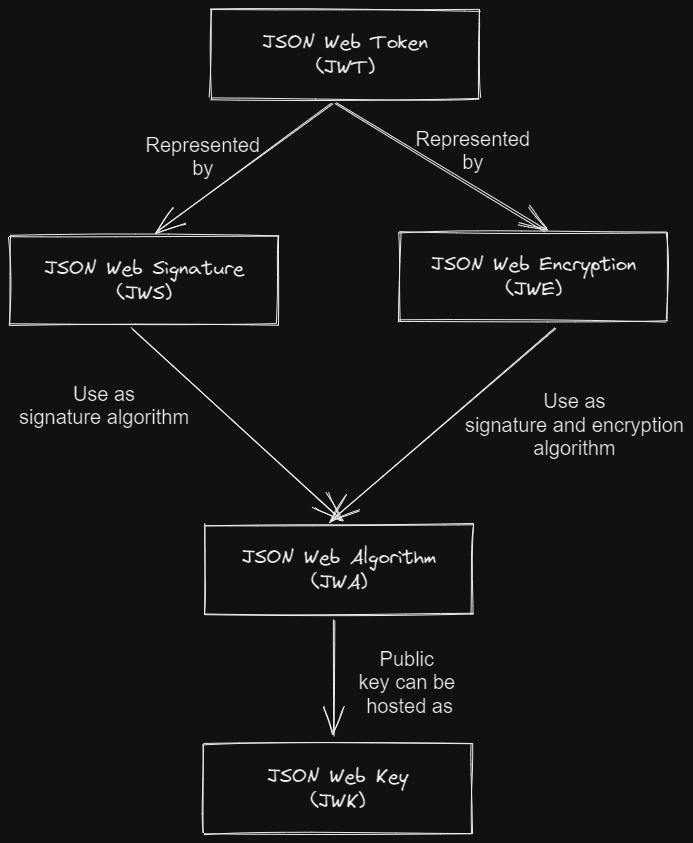
Combining JWT (JWS) and JWE, or using JWE alone, depends on your need for data confidentiality, integrity, and authenticity.Here’s a clear breakdown:✅ 1. Using JWE Alone (Encrypted Token Only)🔐 What it gives you:Confidentiality: Data is hidden from everyone except the token recipient.Integrity: Built-in integrity checks (via HMAC or AEAD modes like GCM or CBC+HMAC).No one else can read or tamper with the payload.❗What it does not guarantee:Authentication of sender — i.e., who created this token?Anyone with the recipient's public key can encrypt a token.🧠 When to use JWE alone:Use CaseWhy?End-to-end encrypted messagingProtect content from intermediate partiesMicroservice communication over insecure channelsEncrypt payloads that may traverse the internetSensitive data inside tokenLike SSNs, bank info, secrets✅ 2. Using JWT + JWE Combined (Sign, then Encrypt)This means:First: sign the JWT → creates a JWSThen: encrypt that signed JWT → wraps JWS inside JWE🔐 What it gives you:✅ Confidentiality: Payload is encrypted and hidden from all parties without the private key.✅ Integrity: Encrypted JWT cannot be modified.✅ Authenticity: Signature ensures the data is from a trusted issuer.✅ Non-repudiation: Sender can’t deny creating it (if signed with private key).💡 This gives end-to-end security:FeatureJWE aloneJWT (signed)JWT + JWEEncrypted✅❌✅Signed❌✅✅Sender identity❌✅✅Receiver-only access✅❌✅✅ 3. Real-World Use CasesUse CaseToken TypeOAuth2 Access TokensJWT (JWS) — fast and verifiableID tokens with sensitive info (OpenID Connect)Signed JWT inside a JWEBanking & healthcare tokensJWT + JWE for privacy + authenticationAPI to API communication with secret dataJWE or JWT + JWE🚀 SummaryRequirementRecommendedOnly integrity/authenticationJWT (signed)Only confidentialityJWEConfidentiality + authenticityJWT inside JWE
What is benefits using jwt and JWE combine and JWE alone